
BRIGHT
American Gypsy Memoir Series — Part 6

BRIGHT American Gypsy Memoir Series — Part 6
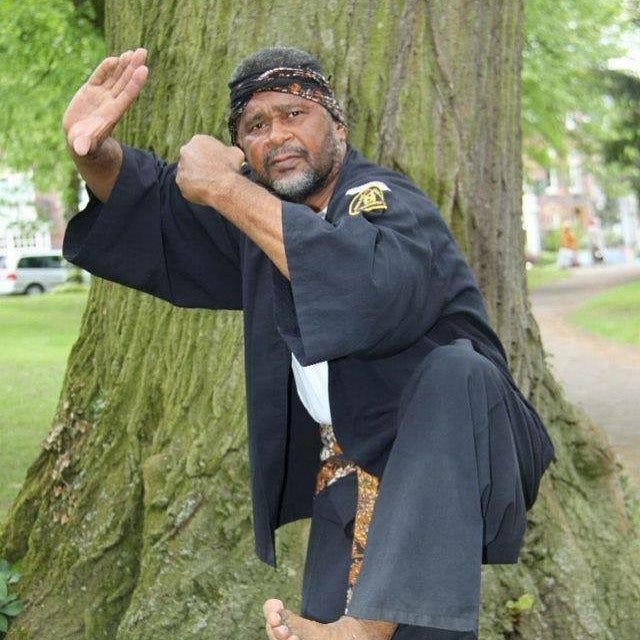
Bright was a searcher. A pioneering, tough, smart kid from a rough background. He had several brothers and sisters and was the only one of us with no musical talent. When I got back from Torremolinos that first summer back home, he was just getting ready to join the army. He would be lucky and avoid going to Nam, and be deployed to Korea instead. Before he left, I shared with him the many thoughts I had about the new world, and he was duly fascinated and ready to explore. But first things first. He had to do this to avoid being potentially destroyed in Nam, and he would get to see some of the new world in the process. Albeit not the Western part, but Bright had always been drawn to the Eastern side too. The mysticism, the martial arts, the philosophy. The discipline of it suited him. We would get a view from both sides. Like explorers before us.
There were Black men who mapped the world long before Columbus ever set foot on a boat. Estevanico, who walked through the American Southwest in the 1530s. Ibn Battuta, the Moroccan scholar who covered more ground in the 14th century than any explorer of his era. Matthew Henson, who reached the North Pole before any white man did and got almost none of the credit. We didn’t know all their names back then, but we felt their spirit. We were going to lead our brothers and sisters out of this place and into the promised land.
It was two years before I’d see Michael again. I’d moved to San Francisco for the year. Haight-Ashbury. Page Street. But that’s another story. When he returned from his tour he was more ready than ever. The energy, the motivation, the vision. We saw two sides of the same thing. It was a great collaboration. He got it. And like that little community club we’d discovered out in what is now known as the Valley, we were determined to make something happen.
Back in 1964 the Valley was a very different place. No freeways threading through it wall to wall. No sprawl. No mega city. Just open space and a slower pace, about an hour and a half from Pasadena. We’d found this small community club out there, a little oasis that became our place to hang. Our testing ground before the world got bigger. That same feeling was back now, only the stakes were higher and the destination was a lot further away.
What were we trying to escape from? For all practical purposes it was revolution. The Black Panthers and the Nation of Islam were on every other street corner. Contradictions stacking up on every side against everything we were supposed to believe equated to normal “American” life. Meanwhile Huey Newton, Eldridge Cleaver, Muhammad Ali, Malcolm X were telling us something totally different, and the sea was getting rougher by the day.
You could hear it in the music too. Marvin was asking what in the world was going on. I remember when that album dropped it depressed me. I thought, as true as it was, this was the world we were dealing with. Needless to say it grew on me. And somewhere in the background Sly was already warning that there was a riot going on.
Our reality was Pasadena. Multicultural, blue sky, fast cars, Hollywood, Laurel Canyon, Topanga Canyon, and all the musical and cultural contradictions you could conjure up.
We weren’t running from it. We were stepping outside the frame to see it clearly.
I guess I imagined some sort of mass migration out of this place. I didn’t know at the time exactly what it was, but I didn’t feel like I belonged there, not unless I was going to be seriously rich. This was a Jim Jones exit without the religion and hopefully without the Kool-Aid. Just having seen something different was freedom, and I knew there was even more out there somewhere. I guess we needed a new testing ground.
In a few years the SLA would kidnap Patty Hearst and the revolution proper would start and all hell would break loose. But even before that, the ground was already shifting under our feet. It was against this backdrop that we were being asked to make a choice I never believed in and never wanted. The slogan in 1970 was “America, love it or leave it.” I chose the latter.
Bright’s mission was simple: find the perfect spot on the continent for the band with six members, three wives, two children and one manager/photographer with two girlfriends. After Bright left he would check in from time to time. But there were no mobile phones, no email, no internet. Just the telephone, the telegram and the post office. Slowly, inevitably, we lost touch. Six months would pass before we saw Bright again.
Lorenzo and I departed LA as the first leg of the band on the charter flights we’d booked bound for Amsterdam. Upon arrival we found a hotel for the night. Lorenzo was my best friend from high school, recruited to be the lead singer of the band. There was bad blood on the horizon between us, but we didn’t know any of that at the time. Right now we were just two guys from Pasadena loose in Amsterdam, and that was enough to deal with.
Amsterdam was a not so sobering yet strangely exotic adventure for us. A land of beautiful straightforward women and the men, tall, broad featured northern giants. I was 6’5” and average height there. The warm atmosphere of the cafés along the canals and the busy joints that lined the Damrak made it hard to find any sort of recognizable food. Bitterballen, frikandellen and croquettes were more like reconstituted scraps that had been reshaped into something resembling food. We became particularly fond of friet speciaal. Freeze dried fried potatoes with a big scoop of mayonnaise, onion and sweet curry sauce. Warm, filling and about the cheapest thing going.
We found our way to the Melkweg to ask about doing a gig there. Melkweg (Milky Way) was one of two large clubs in Amsterdam, the other being the Paradiso, a place we would eventually play many times. We were lugging around a gigantic Sony reel to reel tape recorder with our demos, which we would dutifully set up and play for anyone that asked. In this case they loved the tracks but could only offer one night, not the residency we were looking for or needed to support the crew of fifteen people who were to follow us over in two short weeks. It was our job as point men to search for the gig of a lifetime. The one that was going to catapult us into fame and fortune and get the whole team back to LA within a few months.
We’d gotten there on a charter flight, student discount, courtesy of some very convincing university ID cards I’d made myself. I had no plans to attend any legitimate university except the university of life, but I was really good at art, and those cards got us the discount student flights we needed. No questions asked.
After two nights Amsterdam was out. We bought some very good red Lebanese hash, which just like the stock market had its daily price announced on the radio every morning with the other hash sources, Afghan, black Citral and plain Moroccan. We decided for no particular reason to head toward Denmark. A spontaneous hash buzz decision. The train ride was an all nighter up through Hamburg and straight to Copenhagen. We wanted to play in a northern European country, and Holland wasn’t quite far enough north.
We ate, smoked and speculated about what we would find. Hauling bags, food and that godforsaken tape recorder was a nightmare, but we didn’t think twice about it. The morning we arrived at the central station we needed to get our bearings. We knew people spoke English, so finding a temporary place to stay wouldn’t be too hard. The first person we felt comfortable approaching was a tall African guy. We questioned him about what clubs he knew and what the scene was like in Cope. On a whim we decided to ask if he knew any other Americans around and tried to describe Bright, whom we hadn’t heard from in at least six months. He looked thoughtful and said if we wanted to find out anything more about the Black scene in Cope there was a club called Casanova somewhere in the underbelly of Copenhagen’s lower side.
There wasn’t a ghetto as such, mainly because the social system would never allow such a thing to happen. It just wasn’t possible. Everyone had enough to eat and a comfortable place to stay. You paid for it with the second highest tax rate in the world. But no poverty and no ghetto. But that didn’t stop the brothers from gathering and the Danish women from investigating this strange culture they’d never gotten to see up close and personal.
We stuffed ourselves with Danish pastries from the little vending machines outside the bakeries that stayed operational all night. They took krone coins and the pastry was still warm. We were both sick as dogs by the time we finally found Casanova.
This had to be the place. Strangely familiar but very different from any club we’d known in LA. The sounds were different, the accents and Black people from every country. Small. Hot. Intimate. We stuck out in our West Coast hippie attire.
We stepped inside and scanned the room. Tables packed tight. Smoke hanging in the air. Voices bouncing off the walls.
Then we saw him.
Sitting at a table near the back of the room.
Bright.
Remind you of anything? “America Love it Or Leave It.” Same slogan, different era. The psychology never changes. I didn’t argue about it. I just left. Sometimes the most radical thing you can do is simply go.
Did you ever reach a point where staying stopped making sense? I’d love to hear about it. hit me back with a comment!✏
Next week we cross the mountain to Sitges, meet a Spanish prince named Pepe, and find out if Pony Poindexter’s promise of a castle, a jazz club, and three meals a day was real or just another pipe dream.
If you’re not already subscribed, hit the button below. It’s free, it comes once a week, and there’s a lot more road still to cover.
Be sure to book»»»»»»»»🎟 Book here🎙️Music from 3:30 to 6:30
A relaxing soulful Sunday afternoon show with🌞
THE STEVE CLISBY BAND-May 3rd !
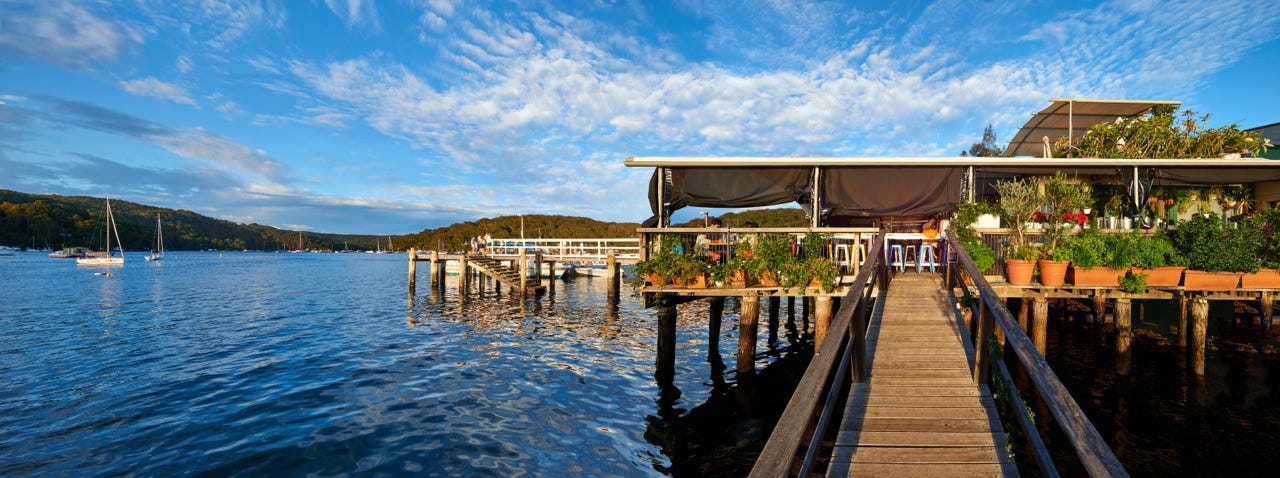

Unheard subscribers get first access to tickets before the public release next week.
Thanks for checking out Unheard. I can’t wait to share more………🙏🏾
What a life…
Love these stories!